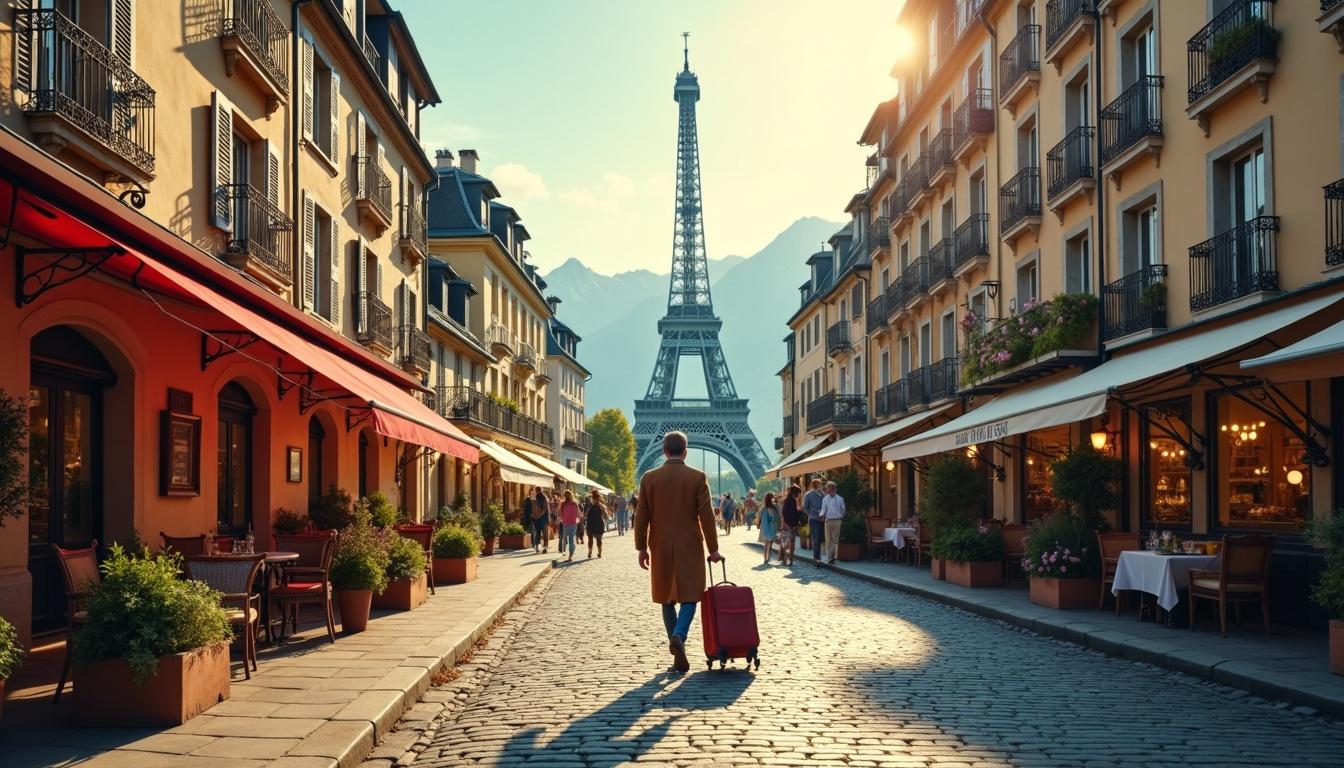
Europe can feel overwhelming for first-time visitors.
There are dozens of countries, hundreds of cities, countless attractions, and an enormous number of possible itineraries.
The good news is that Europe’s excellent transportation network makes it possible to experience several destinations during one trip.
A 10-day itinerary can provide a wonderful introduction to Europe without requiring you to spend your entire vacation moving between airports.
Here’s a sample route combining France, Switzerland, and Italy.
Days 1–3: Paris, France
Begin your European adventure in Paris.
The French capital offers an incredible combination of architecture, art, food, history, and culture.
Start with some of the city’s most famous landmarks, including the Eiffel Tower, Louvre Museum, Arc de Triomphe, and Notre-Dame area.
But don’t spend the entire trip checking attractions off a list.
One of the best ways to experience Paris is simply to walk.
Explore charming neighborhoods, stop at a café, visit a local bakery, and spend an evening enjoying the atmosphere along the Seine.
Things to Try in Paris
Consider experiencing:
- Eiffel Tower views
- Louvre Museum
- Seine River cruise
- Montmartre
- French pastries
- Local cafés
- Traditional French dinner
For accommodation, staying near a convenient Metro station can make sightseeing considerably easier.
Day 4: Travel to Switzerland
Take a train from Paris toward Switzerland.
One of the advantages of traveling through Europe by train is that the journey itself can become part of the experience.
Instead of dealing with airport security, luggage restrictions, and long airport transfers, you can often travel directly from one city center to another.
Depending on your itinerary, you could base yourself around Interlaken, Lucerne, or another Swiss destination.
Days 5–6: Swiss Alps
Switzerland is where your European adventure begins to feel dramatically different.
Interlaken is surrounded by spectacular mountains and provides access to numerous outdoor activities.
You can take scenic trains, cable cars, boat trips, or hiking excursions.
If you’re visiting during warmer months, hiking is an excellent way to experience the landscape.
During winter, skiing and snow activities become major attractions.
Remember that Switzerland can be expensive, so planning accommodation and transportation in advance can help control your budget.
Day 7: Travel to Italy
Continue south toward Italy.
The exact route can vary depending on your interests, but northern Italy provides an excellent transition from the Alps to Mediterranean Europe.
Consider visiting Milan, Lake Como, or another northern Italian destination.
Lake Como is particularly appealing if you want beautiful scenery and a more relaxed experience.
Days 8–9: Italy
Spend your final full days exploring Italy.
You could choose Milan for fashion, architecture, and city life, or focus on a smaller destination for a slower experience.
Italian food should obviously be part of the itinerary.
Try regional specialties rather than relying entirely on familiar tourist dishes.
A local pasta dish, pizza, gelato, espresso, or traditional dessert can become one of the most memorable parts of your trip.
Day 10: Final Exploration and Departure
Keep your final day flexible.
Rather than scheduling multiple attractions, leave enough time for shopping, photography, a relaxed meal, and your journey to the airport.
If you’re flying home from a different city than where you started, consider booking an open-jaw flight. This can sometimes reduce unnecessary backtracking.
How to Travel Around Europe
For a first European trip, trains can be extremely convenient.
High-speed rail connects many major cities, while regional trains can take you into smaller destinations.
However, don’t automatically assume a rail pass is the cheapest option.
Compare the cost of individual tickets with rail-pass options based on your actual itinerary.
Booking some long-distance trains in advance can also help you find better fares.
What to Pack
Packing light can make a huge difference.
A European trip involving several cities means you’ll regularly move luggage between hotels, train stations, and transportation hubs.
Consider packing:
- Comfortable walking shoes
- Lightweight jacket
- Versatile clothing
- Travel adapter
- Portable charger
- Small day backpack
- Reusable water bottle
- Travel documents
- Basic medications
- Copies of important documents
A comfortable pair of shoes may be the single most useful item you bring.
You can easily walk several miles per day while exploring European cities.
Money-Saving Tips
Europe doesn’t have to mean luxury prices.
Traveling during shoulder seasons can sometimes provide a balance between favorable weather and lower demand.
Book accommodation slightly outside the most expensive tourist zones while staying near public transportation.
Eat at local restaurants away from major landmarks.
And remember that some of the best European experiences are free.
Walking through historic neighborhoods, enjoying public squares, exploring markets, and watching sunsets can create wonderful memories without requiring an expensive ticket.
Travel Planning Checklist
Before leaving home, confirm:
- Passport requirements
- Visa requirements
- Travel insurance
- Accommodation
- Transportation
- Airport transfers
- Attraction reservations
- Mobile data/eSIM
- Payment cards
- Emergency contacts
Keep digital and offline copies of important documents.
Final Thoughts
A 10-day European trip won’t allow you to see everything—and that’s perfectly fine.
The goal of a first trip shouldn’t be to collect as many countries as possible.
Instead, focus on a manageable route and give yourself enough time to actually experience each destination.
Paris can introduce you to European art and culture, Switzerland can provide spectacular alpine scenery, and Italy can finish the journey with food, history, and unforgettable landscapes.
Most importantly, leave some room for spontaneity.
Sometimes the most memorable travel experiences aren’t the attractions you carefully planned—they’re the unexpected café, beautiful street, friendly local, scenic train ride, or sunset you discover along the way.
Leave a Reply